- Rehabilitation in Spain can be right for anyone who needs professional support with addiction, an eating disorder or destructive behaviours, regardless of their background, career or circumstances.
- Being away from home can provide the privacy, distance and space needed to focus properly on recovery, particularly for people with significant family, professional or public-facing responsibilities.
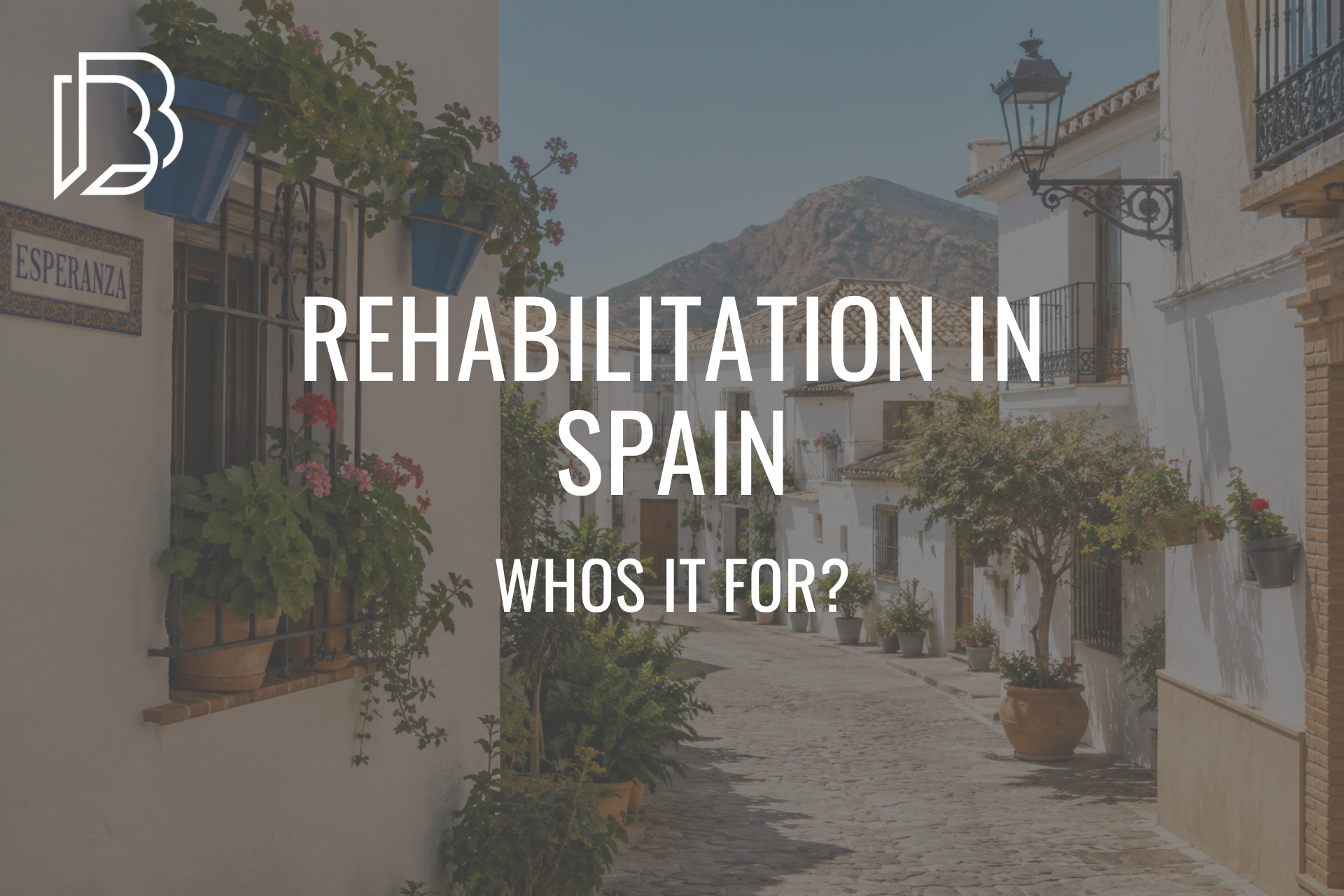
- Spain offers more than a change of scenery. The combination of sunshine, outdoor space, privacy and a different pace of life can create a positive environment in which people can step away from their usual routines and concentrate on treatment.
Why Rehabilitation in Spain?
There is a common assumption that residential rehabilitation is only for people who have reached a complete crisis. Perhaps they have lost their job, their relationship or their financial security, or their drinking or drug use has become impossible to hide. In reality, addiction and other destructive behaviours do not always look dramatic from the outside, and many of the people who need professional support are still managing careers, businesses, families and responsibilities while privately struggling to maintain control.
For those people, the decision to go to rehab can feel particularly significant. Why leave the country? Why step away from a life that, on the surface, may still be functioning? And why Spain?
The answer is that rehabilitation in Spain can offer something that is difficult to create when treatment takes place in the middle of everyday life: distance. Distance from familiar routines, triggers and pressures, but also the privacy and physical space to focus properly on recovery.
Who Is Rehabilitation in Spain For?
Rehabilitation in Spain can be appropriate for anyone who needs professional support with addiction, an eating disorder or destructive behaviours, regardless of their age, profession or circumstances. The important question is not whether somebody has reached some imagined point of being ‘bad enough’ for rehab, but whether their current way of coping is no longer working and whether they need more structured support than they have been able to create for themselves.
At The Bridge, people arrive at very different stages of their experience. Some have been living with addiction for many years and have already tried repeatedly to stop. Others recognise that their behaviour is becoming increasingly difficult to control but have reached out before the consequences become more serious. Some continue to run companies and maintain demanding careers, while others have reached a point where their health or relationships have begun to suffer significantly. What connects them is not a particular background. It is the recognition that something needs to change.
Why Travel Abroad for Treatment?
For many people, the greatest benefit of travelling to Spain is not simply the treatment itself, but the opportunity to step outside the environment in which their problems have developed. At home, even someone who is highly motivated to recover can remain surrounded by the same routines, relationships, pressures and places that have become associated with their drinking or drug use. Work emails continue to arrive, family responsibilities remain, familiar social situations are waiting and the usual ways of coping are never very far away.
Coming to Spain creates a clear physical separation from all of this. It does not make recovery easy, and it certainly does not remove the difficult therapeutic work involved, but it can make that work easier to concentrate on. There is a psychological value in knowing that, for a period of time, your main responsibility is to look after yourself and engage with treatment.
This is particularly valuable during the early stages of recovery, when establishing a new routine and gaining some stability can make such a difference. At The Bridge, clients have the opportunity to step away from the demands of everyday life and focus on the physical, emotional and psychological aspects of their recovery in a private and supportive environment.
The Privacy of Rehabilitation in Spain
For some clients, the decision to travel to Spain is primarily about privacy. They may hold a senior position in a company, run their own business, work in a public-facing profession or simply live in a community where they are concerned about other people finding out that they are receiving treatment. Addiction still carries a great deal of stigma, and the fear of being judged can be enough to prevent someone from seeking help altogether.
Going abroad cannot remove that stigma, but it can create a degree of separation from the world in which someone normally lives. At The Bridge, discretion is an important part of the environment we have created. Our programmes are deliberately small and private, and for people who require a higher level of confidentiality, The Residence provides a private villa and a one-to-one treatment option.
That flexibility can be particularly important for people who have significant professional or family responsibilities. The aim is not to make treatment less intensive in order to fit around someone’s life, but to create a setting in which they can receive the level of support they need without having to expose their private circumstances to everyone around them.
Why Spain?
There is a practical reason that Spain has become an attractive destination for residential treatment, but there is also something more subtle about recovering somewhere with a different climate and pace of life. Andalucía offers sunshine, outdoor space and a lifestyle that encourages people to spend more time outside, and while none of these things is a treatment for addiction, they can provide a positive backdrop to the therapeutic work taking place.
Recovery requires more than simply stopping a behaviour. It involves rebuilding sleep, nutrition, exercise, routine and the ability to tolerate difficult emotions without immediately reaching for an old coping mechanism. A calmer environment can make it easier to establish those foundations. Time outdoors, healthy food, physical activity and a little more space to breathe are small things individually, but together they can help create a very different daily experience from the one someone may have become accustomed to.
At The Bridge, these elements sit alongside the therapeutic programme rather than replacing it. The sunshine is not the treatment. The treatment is the treatment. Spain simply provides an environment in which people can step back from their normal lives and give that treatment their full attention.
Sometimes Distance Is Part of the Treatment
There is an important distinction between running away from your problems and deliberately creating enough distance to deal with them properly. Rehabilitation in Spain is about the latter.
For someone who has spent years living within the same patterns, a change of environment can make those patterns easier to recognise. Away from the people, places and routines associated with drinking or using drugs, there is an opportunity to establish a new routine and experience what life feels like without constantly responding to the next temptation, argument or crisis.
This is one reason residential treatment can be so valuable. It provides a period in which the usual distractions are reduced and the person can begin to understand what has been happening beneath the behaviour. Therapy can explore trauma, anxiety, relationships, self-esteem and the emotional patterns that may have contributed to addiction, while the structure of residential treatment provides the stability needed to begin changing those patterns.
You Do Not Have to Wait Until Things Get Worse
Perhaps the most important thing to understand about rehabilitation in Spain is that you do not need to wait until your situation becomes a crisis before asking whether treatment could help.
If you are drinking more than you intend to, using drugs to cope with everyday life, repeatedly trying and failing to stop, hiding your behaviour from people close to you or finding that an addiction is beginning to dictate your decisions, those are all reasons to have an honest conversation about treatment. The same applies to eating disorders and other destructive behaviours. You do not need to fit somebody else’s definition of how unwell you should be before you are entitled to support.
At The Bridge, our role is not to decide whether you are ‘bad enough’ for rehab. It is to understand what is happening, listen to what you need and establish whether our programme is the right fit for you.
Why The Bridge?
There are rehabilitation centres throughout Spain, and choosing the right one requires more than looking at the facilities or the weather. Treatment needs to be personal and structured, and it needs to address the reasons behind the addiction rather than simply removing someone from their usual environment for a few weeks.
At The Bridge, we combine an abstinence-based programme with individual and group therapy, trauma work, behavioural therapy and ongoing support, with treatment tailored to the individual rather than delivered as a standard package. We are a family-run organisation, and our approach has been shaped by more than three decades of personal and professional experience with addiction and recovery.
Spain provides the setting, but the setting is only one part of the picture. The real purpose of coming here is to create enough distance from everyday life to stop, take stock and begin doing the work that makes a different life possible.
For some people, that will mean finally asking for help after years of trying to manage alone. For others, it will mean recognising that they do not need to wait for their life to fall apart before they take action. Rehabilitation in Spain is not for a particular type of person. It is for anyone who needs support and who would benefit from the privacy, space and environment that Spain can provide while they focus on getting well.