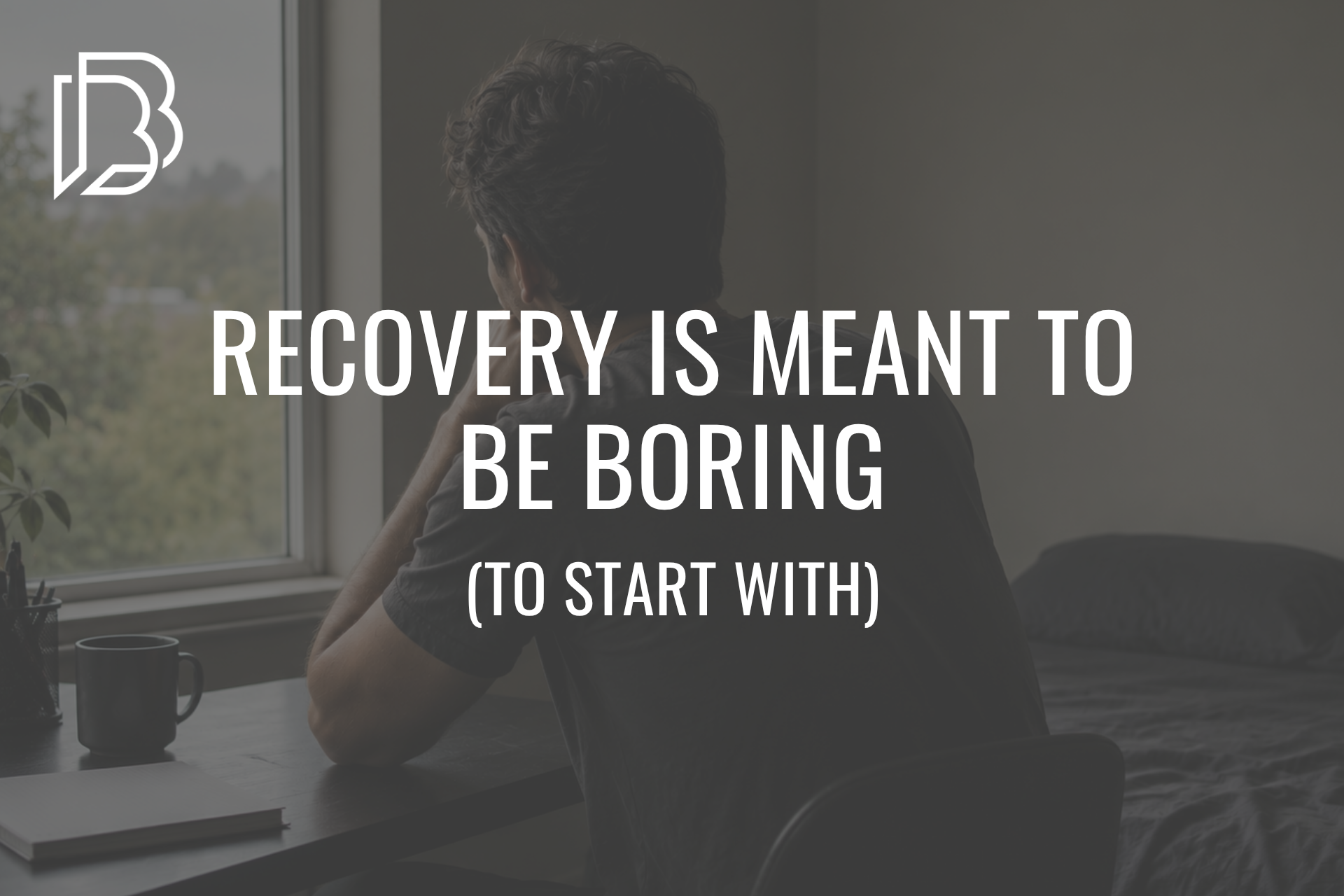
At some point in early recovery, almost everyone says the same thing, either out loud or just to themselves: this is so boring. If that is where you are right now, here is the short version of what we tell clients at The Bridge.
- Boredom in the first weeks of recovery is normal, and it is not a sign that something has gone wrong
- Routine and repetition are doing quiet, important work on a nervous system that needs time to settle
- The flatness is temporary, and it lifts as new interests and energy slowly return
Now for the longer version, because boredom deserves a proper explanation rather than just a pat on the back.
Why early recovery feels so flat
For months or years, addiction kept the body and mind on a rollercoaster. Highs, crashes, chasing, hiding, fixing. It was exhausting and often destructive, but it was rarely dull. The brain got used to enormous spikes of dopamine and equally enormous crashes, and over time it built its sense of normal around that chaos.
Take all of that away, replace it with meals at set times, therapy sessions and early nights, and of course it feels like someone has turned the volume down on life. In a way, they have, on purpose.
This flattening even has a name. Many people in early recovery describe something close to what researchers call anhedonia, a reduced ability to feel pleasure from everyday things, often paired with restlessness and low motivation. It is uncomfortable, but it is also a well documented part of the brain recalibrating once substances or compulsive behaviours stop hijacking its reward system. The National Institute on Drug Abuse has written at length about how the brain’s reward pathways shift during early abstinence, and it is worth reading if you want the science behind why everything feels a little grey for a while.
Why we do not rush to fill the silence
It would be easy to fill every hour with activity to drown out the discomfort. Some treatment centres lean heavily on this, packing the day with excursions and entertainment so nobody has a spare moment to feel bored. We tend to avoid doing this, and there is a reason for that.
Boredom, sat with rather than escaped, is often where the real work happens. It is in the quiet moments, the ones with nothing to numb and nowhere to hide, that people start noticing their own thoughts again. Cravings, old habits of mind and the urge to fix an uncomfortable feeling instantly, rather than simply tolerate it, tend to surface most clearly when life slows down. Learning to sit through that discomfort without reaching for a drink, a drug, a behaviour or even a constant stream of distraction is one of the central skills of recovery, and it cannot be learned by avoiding the very thing that triggers it.
This is part of what proper rehabilitation actually involves: structured, unglamorous, and built around routine rather than constant stimulation.
The schedule is doing more than it looks like
A typical day in early treatment might include set wake times, meals, group therapy, some light exercise, quiet time and an early bedtime. On paper it looks almost monastic. In practice, that structure is rebuilding something addiction had quietly dismantled: a reliable internal clock and the sense that life can feel steady without being driven by cravings or chaos.
Sleep, regular meals, gentle movement and predictable routine are not filler activities that happen while the real therapy goes on somewhere else. They are the treatment, every bit as much as the sessions on the timetable. A nervous system that has spent years in survival mode needs consistency before it can take on anything more demanding, much like a body needs rest after an injury before it can do anything strenuous.
It will not stay boring
The flatness of early recovery is real, but it does not last forever. As the brain and body settle, most people notice colour creeping back into life in small ways first. A joke actually lands, food tastes like something again and a conversation holds your attention for longer than five minutes. Energy returns, slowly, and with it comes room for genuine interests, friendships, hobbies and plans that have nothing to do with managing addiction.
This is usually the point where boredom stops feeling like an empty stretch and starts feeling more like spaciousness, room to work out who you actually are and what you enjoy, without active addiction shouting over the top of every decision.
If you are bored right now
If you are in early recovery and bored, that is not a sign that treatment has failed or that something important is missing. If anything, it is closer to the opposite. It usually means the chaos has stopped long enough for you to notice the quiet, and that quiet feels strange mostly because it is unfamiliar.
Talk to your therapist about it rather than treating it as a problem to fix on your own. Boredom is one of the more common, and most underestimated relapse triggers, precisely because it feels so mundane next to a dramatic craving. Naming it and having a plan in place for it is genuinely part of the work.
So if today felt flat, slow and a little dull, you are probably doing it right. Hang in there! It does get more interesting from here, just not in the way addiction used to mean interesting.